How Long Does Coconut Cream Last? Storage Guide for Food Service
Everything you need to know about storing coconut cream — unopened shelf life, opened storage, and food safety.
Quick Answer
Why UHT Coconut Cream Lasts So Long
UHT stands for Ultra High Temperature. The coconut cream is heated to 135-150°C (275-302°F) for 2-5 seconds, killing all bacteria and enzymes that cause spoilage. It's then immediately sealed in an aseptic Tetra Pak — a sterile, multi-layer packaging that blocks light, air, and bacteria.
The result: shelf-stable coconut cream that lasts 18 months at room temperature without any preservatives. Kara's ingredient list is just coconut extract and water. The long shelf life comes from the process, not from chemicals.
Storage Guidelines
Unopened
- Temperature: Room temperature (ideally below 25°C / 77°F)
- Location: Dry storage area, away from direct sunlight
- Stacking: Cases can be stacked on pallets. Each case is 376 x 196 x 213mm, net weight 12.0 kg.
- No refrigeration needed — this is a major advantage for food service operations with limited cold storage
Opened
- Transfer to a clean, covered container (not the open Tetra Pak)
- Refrigerate immediately at 4°C (39°F) or below
- Use within 3-4 days
- Don't freeze — freezing changes the texture. The fat separates and becomes grainy when thawed.
Diluted (as coconut milk)
- Once diluted with water, treat it like fresh coconut milk
- Refrigerate and use within 2-3 days
- Mix well before each use — diluted cream separates faster
Signs of Spoilage
Even with an 18-month shelf life, check for these before using:
- Swollen packaging — gas buildup indicates bacterial growth. Do not open. Discard.
- Sour smell — fresh coconut cream smells mildly sweet and coconutty. Any sourness or fermented smell means it's gone.
- Unusual color — should be white to very pale cream. Yellow, pink, or gray discoloration means discard.
- Curdled texture — some natural separation is normal (shake or stir to recombine). Chunky, curdled texture that won't recombine is spoiled.
Comparison: UHT vs Canned Shelf Life
| Format | Shelf Life | Storage |
|---|---|---|
| UHT Tetra Pak (Kara) | 18 months | Room temperature |
| Canned coconut cream | 2-5 years | Room temperature (heavier, harder to open) |
| Fresh coconut cream | 3-5 days | Refrigerated only |
| Coconut cream powder | 12-24 months | Room temperature, sealed |
UHT Tetra Pak hits the sweet spot: long shelf life without the weight and hassle of cans, and much longer than fresh. For food service, it's the most practical format.
Inventory Planning for Restaurants
With 18 months of shelf life, you can safely order in bulk without waste risk. A restaurant using 20-40 liters per week would go through a 45-case order (540 liters) in about 14-27 weeks — well within the 78-week shelf life.
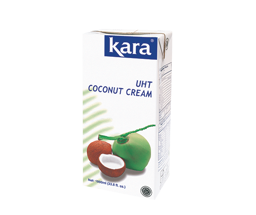
Ready to try Kara Coconut Cream?
1000ml UHT Tetra Pak. 24% fat. 18-month shelf life. No refrigeration. Monkey-labor-free. $43/case (12 packs).