Coconut Cream vs Coconut Milk: What's the Difference?
The complete guide for restaurants, bakeries, and food service buyers.
Coconut cream and coconut milk come from the same source — the white flesh of mature coconuts — but they're not interchangeable. The difference is fat content, and that changes everything about how they cook, taste, and cost.
The Quick Comparison
| Coconut Cream | Coconut Milk | |
|---|---|---|
| Fat content | 20-25% (Kara: 24%) | 5-12% |
| Texture | Thick, rich, scoopable | Pourable, liquid |
| How it's made | First pressing of coconut flesh | Second pressing or diluted cream |
| Best for | Rich curries, desserts, ice cream, sauces | Soups, drinks, smoothies, light curries |
| Price per liter | $3-4 | $2.50-3.50 |
| Can you make the other? | Yes — add water to make milk | No — can't thicken into cream |
That last row is the key insight: coconut cream can become coconut milk, but coconut milk can't become coconut cream. Cream is the more versatile product.
Fat Content: Why It Matters
Fat is what makes coconut products taste rich and feel creamy. It carries flavor, creates body in sauces, and determines whether your curry is silky or watery.
- Coconut cream (24% fat)— thick enough to coat a spoon. Won't break in a hot curry. Whips into a dairy-free topping. Makes ice cream creamy without stabilizers.
- Coconut milk (5-12% fat) — pourable consistency. Good for soups and drinks where you want coconut flavor without heavy richness.
- Light coconut milk (5-7% fat) — essentially diluted coconut milk. Mostly water with coconut flavor.
The Cost-Saving Secret: Buy Cream, Make Milk
Smart food service operations buy coconut cream and dilute it to coconut milk as needed. Here's why:
- Mix 1 part cream + 1 part water = full-fat coconut milk
- Mix 1 part cream + 2 parts water = light coconut milk
- One case of Kara cream (12L) becomes 24-36 liters of coconut milk
- That's $1.19-1.79 per liter vs $2.50-3.50 buying coconut milk directly
You also save warehouse space (one SKU instead of two or three) and reduce ordering complexity.
When to Use Each
Use coconut cream (undiluted) for:
- Thai and Indian curries that need a rich, thick sauce
- Ice cream and frozen dessert bases
- Whipped dairy-free toppings
- Marinades (the fat helps carry spice flavors into meat)
- Dips, dressings, and sauces
- Yoghurt bases and jellies
Use diluted cream (coconut milk) for:
- Soups (tom kha, laksa, chowders)
- Bubble tea and milk tea drinks
- Smoothies and blended beverages
- Coconut rice (dilute 1:1 and use as cooking liquid)
- Light curries and braises
- Coffee drinks and matcha lattes
Ethical Sourcing: Not All Brands Are Equal
The two most common coconut cream/milk brands in the US — Chaokoh and Aroy-D — are both from Thailand and have been implicated in using forced monkey labor. Over 40,000 stores (including Walmart, Target, and Costco) have dropped these products.
Kara coconut cream is from Indonesia, which PETA confirms is free of monkey labor in coconut harvesting. It's also Halal, Kosher, Non-GMO, and Rainforest Alliance certified.
Bottom Line
If you're buying for a restaurant, bakery, or food service operation: buy coconut cream and dilute as needed. You get more flexibility, lower cost per liter, less warehouse space, and consistent quality.
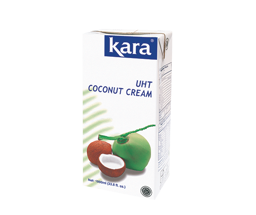
Ready to try Kara Coconut Cream?
1000ml UHT Tetra Pak. 24% fat. 18-month shelf life. No refrigeration. Monkey-labor-free. $43/case (12 packs).